
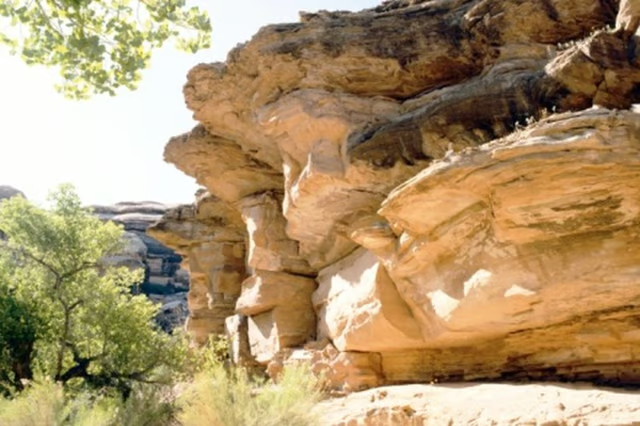


When drawing cliff rocks, you must keep texture, volume and scale in mind. Unlike sketches of pebbles or small stones, drawings of cliff rocks should translate the massive size and towering height of this subject. To help define the scale and weight of cliff rocks in your drawing, choose a photograph for inspiration that shows the cliff's size in relation to other natural formations, such as trees or bodies of water. Studying cliffs in nature and from photographs will help you get familiar with shadows, texture and line before beginning your work.
Examine a photograph of a cliff to get a sense of the texture, coloration and proportion of the subject. Note the vertical reach of the cliff, its incline, and its horizontal distance from side to side. Some cliffs display bands of white and brown coloration, while others show off a mottled gray appearance. Observe the particular physical features that define the cliff you want to draw.
Draw a long horizontal line across your page to represent the ground. Draw this line about one-third of the length from the bottom of your page. Make this line straight and even.
Extend a tall line upward from the horizontal line. This line will define the wall of the cliff, so look to your photograph for reference. Some cliffs extend upward with a sharp vertical edge, while others incline at an angle. Draw this line to the left of the vertical center of your page to keep your picture balanced.
Draw over the line for the cliff, using a dark jagged line to capture the cliff's rocky surface texture. Make this line hard and angular, rather than soft and curving.
Draw a horizontal line extending to the right of the vertical cliff line to the right edge of the page. This line will form the top of the cliff rock.
Apply dark, linear shadows to the cliff rock to form fissures in the surface. Make these shadows vertical in orientation, and keep them angular.
Shade around each fissure with medium shadow. Diffuse this shading into lighter tones surrounding each of these features.
Shade the base and middle of the cliff in medium shadow. Add darker areas of shadow to the bottom of the cliff.
Lightly shade the entire cliff, with the exception of the left top of its surface, to create highlights and dimension.