


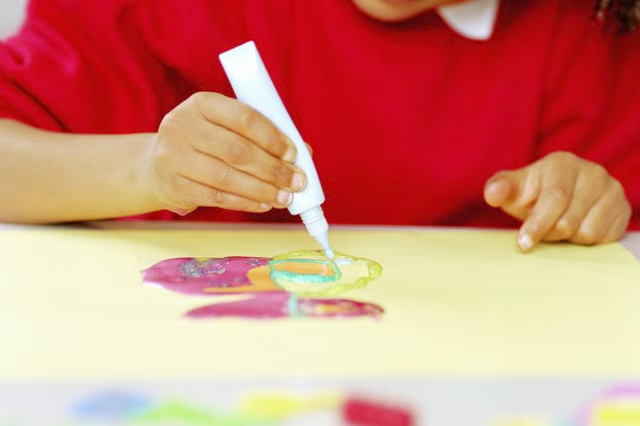
Torn-paper collages and fine art mosaics use a similar process of combining small, colored pieces of material on a support to create a unified composition. The art of making mosaics has a tradition stretching back thousands of years. The ancient Romans developed and perfected the technique as decorations for the floors and walls of their villas. The methods of paper collage- and mosaic-making are both used to produce highly realistic effects.
Things You'll Need:
Things You Will Need
Torn Paper Collage
Gather together sheets of acid-free paper in a wide variety of colors. Buy commercial or handmade paper according to your budget. Select one of your favorite photos or choose any picture for the basis of your collage. Using the picture as a reference, draw your composition on a sheet of smooth hot-press watercolor paper. Use thick, multi-ply 200-pound or heavier paper to prevent buckling.
Tear large pieces of paper for the background. Fit them together to cover the entire surface. Select colors that look good together as you work. Cover the sheet of watercolor paper with a coat of regular white glue using a soft-bristle paintbrush. Press the torn paper pieces down and smooth them out. Block in the basic shapes and forms with larger pieces of torn paper. Start with light colors and add darker colored paper as you progress to the foreground.
Carefully tear and glue smaller pieces to fill in the details. Smear just enough glue on the backs of the pieces to cover them. Smooth each piece down to eliminate wrinkles and air bubbles. Fit the pieces tightly together to compose your picture. Spray the back of the watercolor paper with water. Cover the collage with a sheet of plastic. Put a piece of plywood over the collage and place weights on it. Let it dry overnight.
Mosaic
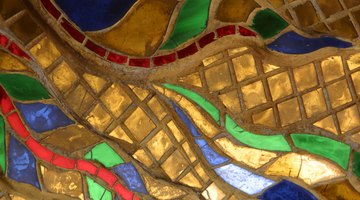
Collect colored pieces of tile, broken pieces of glass or crockery to assemble into a mosaic. Almost any hard, durable material will work. Cut the tiles into appropriate sizes and shapes with a tile saw, or break them up by hand. Work out a pattern design or compose a picture with the pieces, called tesserae, by laying them on a flat surface.
Choose a surface for your mosaic. Use a rigid support such as a piece of plywood, or affix the tesserae to a wall or floor. Coat the surface of your mosaic support with a layer of cement, mortar, grout or heavy-duty adhesive. Cover the entire area, or smaller patches if you want to work at a slower pace. You can also coat the back of each individual piece and stick them to the support one at a time.
Rough in your composition with a stick on the prepared surface. Press the tesserae firmly into the surface following the guidelines. Wipe off any excessive adhesive. Grout the spaces between the tesserae to finish the mosaic.
Warnings:
- Be careful to avoid injury when working with sharp-edged mosaic materials.