
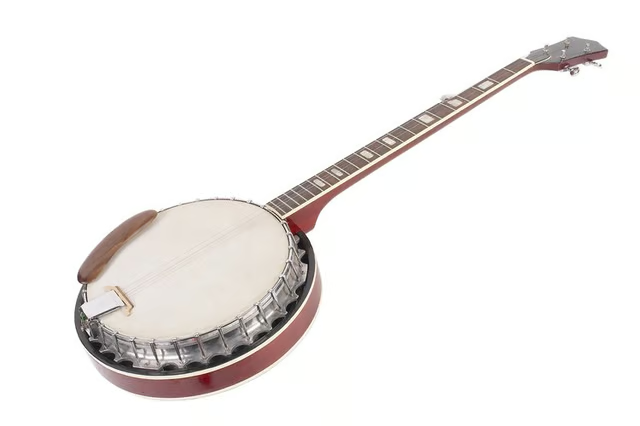


Learning Neil Young songs is a rite of passage for many young aspiring guitar players. "Old Man, " in particular, is a song that many players cut their teeth on. It is a good song to have in your repertoire if you enjoy sitting around jamming with other musicians. In addition to the beauty of the song, Neil Young's Old Man is an easy song for the beginning guitarist to play. Playing it on the banjo is a little more difficult but it is still relatively easy. It is a slow-paced song with a few basic chords.
Things You'll Need:
Things You Will Need
Select a tuning for the banjo. Neil Young plays "Old Man" in the key of D major. Banjo uses open tunings. The most common tuning for the five-string banjo is open G which is gDGBD. A less used tuning is and open D which is f#DF#AD. Both tunings work well to play Old Man in the original key.
Learn the chords for Old Man. The song is quite simple to play on guitar and it is easily translated to the banjo. The song breaks down into two main parts, verse and chorus, and a short introduction. The chords for the verses are D/F/C/G/D/F/C/F. The chords for the chorus are D/Em7/Am7/G. Play the chords for the chorus twice. The intro is Fm7/D/Dsus4. Play the last chord by adding a "g" to a D major chord.
Play the song on the CD player. Play along several times with the song until the chords feel comfortable.
Work out the melody line. Banjos typically play chords in arpeggio form rather than strumming a chord like a guitarist. The melody line for Old Man quite simple. It uses a minimal amount of notes. Listen to the CD and find the right melody notes. The notes are easy to find. Simply hold the chords with your left hand and pluck the strings.
Develop your own banjo arrangement. Once you have learned the chords and melody, now it is time to develop your own arrangement. Experiment with different inversions of the chords. Try different rhythmic patterns with different emphases. Finally, experiment with open D as well as open G tuning.