


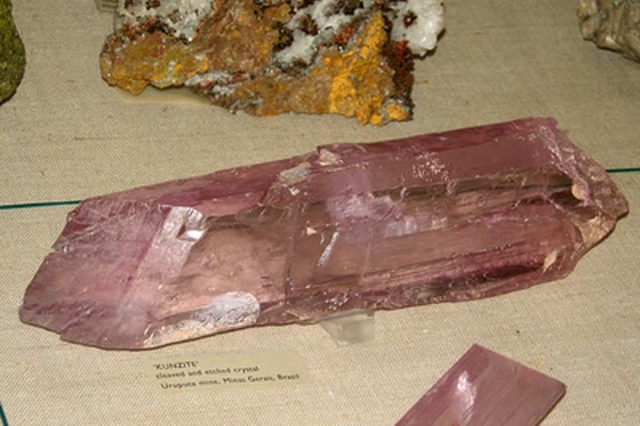
Crystals are sold by gemstone and novelty companies for use in apparel, collections, decorations and spiritual rituals. Many involved in the New Age culture believe crystals possess healing and productive properties. Fixing a broken crystal can be difficult without the correct adhesive. A crystal is a mineral, so even after a repair, the facets or shine of the crystal may never be the same.
Broken Crystal
Put one drop of contact adhesive onto the center of the break on the broken piece.
Align the broken edges like you would a puzzle. If the adhesive oozes from the break, wait 30 minutes, then use tweezers to grasp the oozed adhesive and pull the glue slightly while rotating the tweezer tips so the adhesive wraps around the tips. This removes the slightly hardened adhesive from the outside of the crystal mineral.
Firmly press the broken pieces together. Allow the adhesive to set for about an hour. Put the crystal mineral some place where it won’t be disturbed. According to Maine Pegmatite Workshop 2010, this takes approximately 72 hours.
Cracked Crystal
Fill a syringe with contact adhesive. Syringes for adhesive repairs can be purchased where adhesives are sold. Apply a bit of adhesive to the end of a toothpick if you don’t have a syringe.
Fill the crack in the crystal mineral with adhesive. The more adhesive you can add in the crack, the stronger the repair is because, according to Maine Pegmatite Workshop 2010, the crystal absorbs the adhesive. Reapply the glue into the crack as it is absorbed.
Allow the adhesive to completely cure for 72 hours before handling the crystal.
Things You'll Need:
Things You Will Need
Warnings:
- Use toluene-based adhesives in well-ventilated areas to avoid overexposure to the fumes, which can cause damage to the nervous system. According to the U.S. Government Agency for Toxic Substances and Disease, exposure risk is determined by the duration of exposure.