
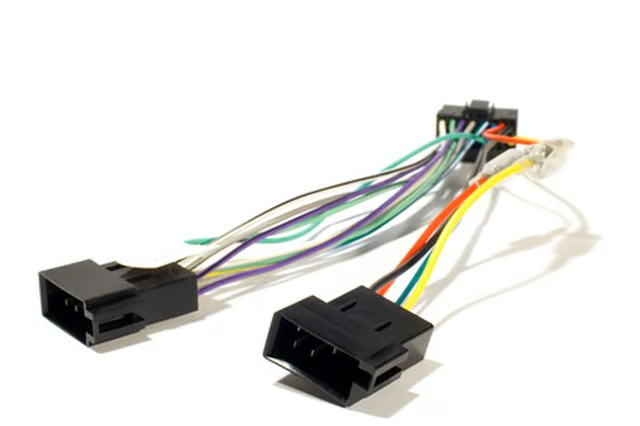


A wiring harness, also known as a cable harness, consists of a batch of wires and cables. These cables transmit signals containing information, as well as energy in the form of operating currents. They are generally bound together by things such as cable ties, conduits and electrical tape, and are then organized in the form of a wire harness. The harness organizes cables according to their purpose, making it easier to trace down problems with complex electrical systems.
Visually inspect the wires in the harness. A magnifying glass can be used to give better perspective. Look for any places where the insulation has been damaged, or for obvious burn marks caused by exposed wiring. Also check to see if the contact points are contamination free and do not have any visible corrosion.
Prepare the harness for a continuity test by turning the power off, since an open circuit could result in the meter getting damaged. Use a fuse or breaker to cut off the power supply for the entire harness.
Perform a continuity test with the aid of a multimeter, as this helps to find breaks and resistances in a circuit. Place the settings on the digital multimeter to “Resistance” so that it can give an effective reading. If an Advance Electric Meter is used, change the settings to the lowest and reset the meter by ensuring the two probes touch together and then turning the thumbwheel until the meter shows zero.
Use the multimeter’s probe tips to touch the surface or area which you wish to find a damaged wire in. A low reading means that the circuit is closed and has no bad wiring, but if it reads as “Infinite” it means that the circuit is open, indicating that a wire is damaged.