
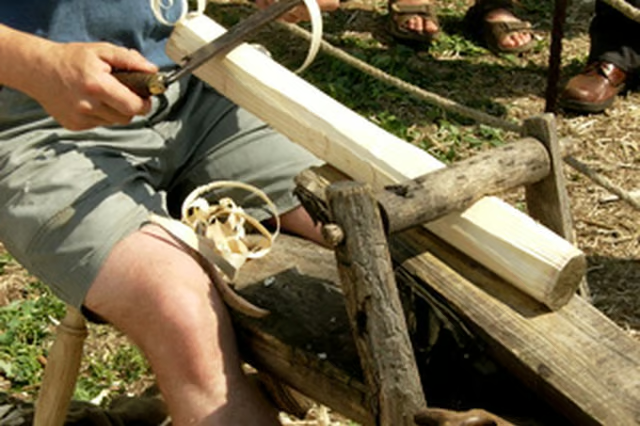


Wood hollowing clears out the center of a block of wood to create an artistic or functional product. Hollowing methods include charring the wood and scraping it away; careful whittling or carving; and using hand or power drills to core out the wood's interior. Wood-hollowing projects range from dugout canoes to sewing bobbins, with modern woodworkers typically using a mechanical lathe.
Adze

Woodworkers use an adze -- an axe-like tool that chops out flat slabs of wood -- primarily for large projects such as hollowing a canoe or shaping shingles. Using adzes to hollow out large vessels dates back to Neolithic times, with such chopping tools chipped from flint. The center of the canoe or cooking vessel was often charred with hot coals to facilitate the hollowing process.
Gouges
A chisel with a curved, hollowed blade for removing chips of wood, a gouge comes in multiple sizes and shapes, with its blade attached to a handle. Large gouges chip out large pieces of wood, while small ones add detail, such as decorative carving, to individual pieces. Like the adze, wordworkers primarily employ gouges to hollow vessels with a wide top.
Drill
A drill can be either a smooth borer, like an ice pick, or a screw-threaded borer, such as in modern power drills. Used to make a narrow hole through a board or block of wood, a drill can clean the pith from the center of a wooden stick to make a tube, and add smaller side holes to turn the tube into a musical instrument.
Lathe
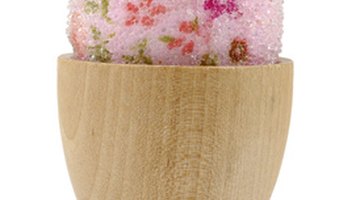
A lathe provides a mechanical means of turning wood for even carving. According to the artisan re-enactors at MacGregor Games, ancient Egyptians and Chinese woodworkers used bow lathes, which turned by attaching a string to a bent stick. Pulling the bent stick back and forth made the string turn the mechanism, rotating the wood.
Later on, crafters used a foot treadle to operate a lathe; modern lathes run on electric power. Attachments make the lathe perform different functions. With the correct attachment, it can drill through wood to make a hollow cylinder to create a vase or a bottle, while preset scrapers shape the outside. Elbow tools attached to a standard lathe make hollowing the inside of a vessel easier and more precise.