
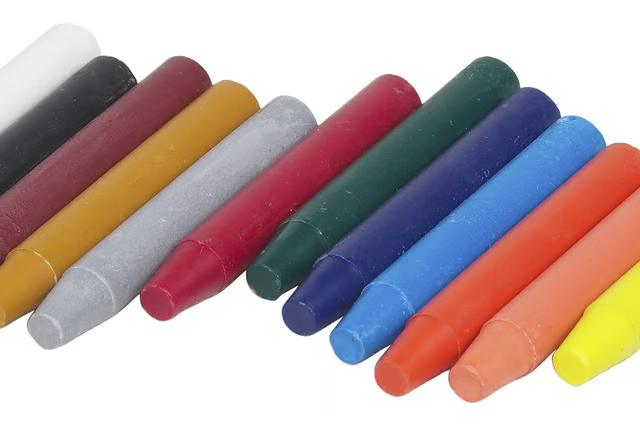
Primary colors can't be created, they must be provided to you. But once you have the primary colors -- red, blue or yellow -- all you have to do is mix colors together to create more colors.
Create secondary colors by mixing two primary colors.
Create tertiary colors by mixing a primary color with a secondary color. Whether using oil, water color, markers or crayons, create new colors with a simple mix.
Check out the primary colors below:
The secondary colors are Orange, Green, and Purple. And if you are using a RGB color wheel, there is another set of secondary colors called additives:
- blue and green produce cyan,
- blue and red make magenta,
- and blue and yellow will make green.
Mix red and yellow to create orange. Orange is a secondary color.
Mix yellow and blue to create green. Green is a secondary color.
Mix blue and red to make purple. Purple is a secondary color.
Mix yellow and green to create yellow-green or chartreuse. Chartreuse is a tertiary color.
Mix blue and green to create blue-green, aquamarine or turquoise. Aquamarine or turquoise are tertiary colors.
Mix blue and purple to create blue-purple or violet. Violet is a tertiary color.
Mix red and purple together to create red-purple or magenta. Magenta is a tertiary color.
Mix red and orange together to create red-orange or vermilion. Vermilion is a tertiary color.
Mix yellow and orange to together to create yellow-orange or marigold. Marigold is a tertiary color.
Mix red and green to create brown. You can add white or black to the brown to make it darker or lighter.
Mix white with a color to create a tint. For example, mix white with red to create pink.
Mix black with a color to create a shade. For example, mix black with red to create burgundy.