


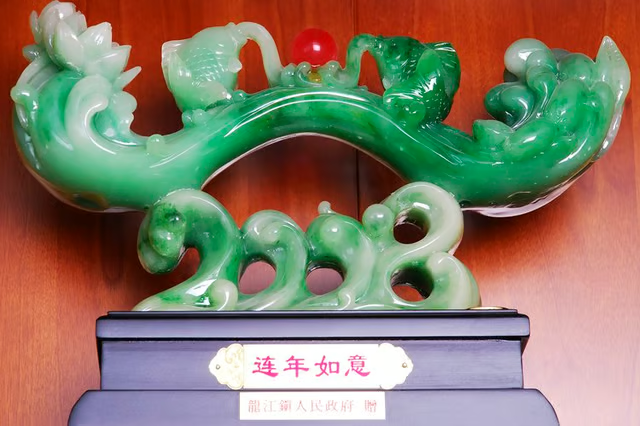
The term "jade" is used to refer to a number of minerals. Adding to the confusion is the fact that the Chinese word for jade, "yu," legitimately refers to a range of minerals that include soapstone. In Chinese, soapstone is called "lao yu" or "old jade." Gemologists, collectors and minerologists, however, limit the term jade to nephrite or jadeite. Due to linguistic and cultural confusion, a soapstone carving may be legitimately called "jade" in one situation, while it might not qualify as jade in another.
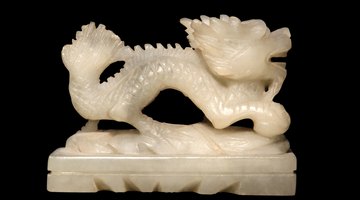
Look at the stone. Fine jadeite and nephrite can be translucent, although they are not always. Soapstone, as a softer stone, can usually not be carved thin enough to be translucent.
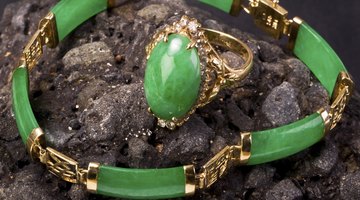
Look for a crystalline structure. Jadeite and nephrite sometimes have a crystalline structure that is visible to the naked eye. If you can't see a crystalline structure, examine the stone under magnification. Soapstone does not have a crystalline structure.
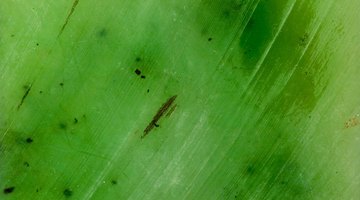
Look at the surface of the stone. Jadeite and nephrite are more shiny with a harder looking surface. Soapstone looks softer and has less of a sheen. Because waxing is an acceptable way of finishing jades, soapstone can sometimes look as if it has a hard surface.
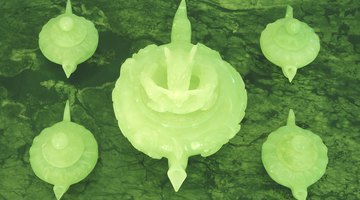
Examine the stone for signs of scratching. Soapstone is much softer than jadeite or nephrite. In older pieces, soapstone is likely to have signs of wear like scratches. Though jadeite and nephrite can also scratch, especially if they have been waxed, you should not see many signs of wear on jadeite or nephrite.
Warnings:
- Don't rely on color. Although jade is often thought of as green, both jadeite and nephrite come in a wide range of colors, including white, purple, pink, brown, orange, blue-green and green.