
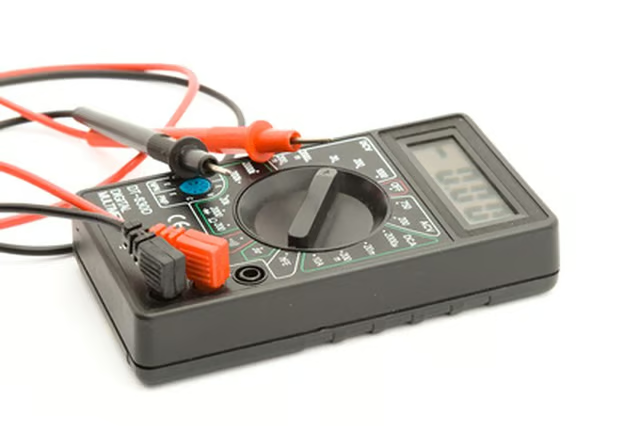


Multimeters are used in all areas of electronics to determine the voltage, amperage or resistance in an electrical circuit. They are available in two varieties, analog and digital. Analog versions are cheaper to buy and are fine for establishing a current, but if you need a level of accuracy, a digital version is much more suitable. They are very simple to use and can come in handy in many situations in amateur electronics.
Auto Range Multimeter
Insert batteries into the multimeter. The number and type of batteries required will vary from model to model.
Connect the wires to the multimeter. One will go into the COM, or Common, connection. The other will go into either the VΩmA or the 10A plug. The VΩmA socket is more commonly used, as the other is for high amp circuits.
Select what reading you want to take. Auto range multimeters have fewer options and are usually limited to V (volts), Ω (resistance) and A (amps).
Connect the wires from the multimeter across the electrical circuit to take a reading.
Switched Range Multimeter
Insert batteries into the multimeter. The number and type of batteries required will vary from model to model.
Connect the wires to the multimeter. One will go into the COM, or Common, connection. The other will go into either the VΩmA or the 10A plug. The VΩmA socket is more commonly used as the other is for high amperage circuits.
Select what reading you want to take. Switched range multimeters have the standard V, A and Ω options, but they can also be set to a range depending on the how high the readings will be. This gives you a much more accurate reading.
Connect the wires from the multimeter across the electrical circuit to take a reading.
Things You'll Need:
Things You Will Need
Warnings:
- Be careful, as you are dealing with live electrical circuits.