
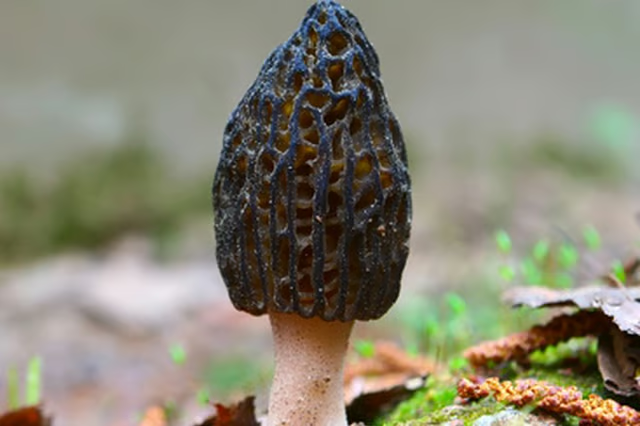


Morel mushrooms are edible wild-harvest mushrooms. There a half a dozen different types of morels, ranging in color from gray or tan to golden and black. They grow in temperate regions across the globe as well as in most regions of the United States. The growing season in the U.S. typically begins in early to mid-April and ends in mid-June but can differ by plus or minus a week in different areas of the country. Mushroom enthusiasts enjoy the thrill of "hunting" for morels each spring, although it is not always an easy task. Morel mushrooms can be elusive and hard to spot, their exact locations often remaining a mystery. If you are interested in finding morel mushrooms, it is helpful to know the best places to look.
Moist Areas
The ground moisture in the spring is essential for the growth of morels. According to the Alaska Mushroom Guide, morels will appear above the ground under wet and warm conditions. They prefer highly organic soil that is not overly wet. Small depressions in the ground that have retained moisture in the soil can produce patches of morels. Air temperature, ground temperature and rainfall impact how well morels will grow.
Under Trees
Morel mushrooms can be found in both conifer and hardwood forests. They grow at the base of dead or dying elms, poplar trees, old ash and pine trees, as well as under aspens. State wildlife and nature departments can offer assistance with tree identification, helping to increase your chances of finding a morel. Pay attention to the differences in bark, because many trees are still without foliage in the early spring. When you identify a tree that morels are known to prefer, keep in mind that morels blend in visually with the forest floor, and you will have to look carefully.
Morels have also been sighted in cedar and hemlock swamps, old apple orchards and even in mulch beds.
After Forest Fires
Morels tend to appear in forests and swamps that have been affected by recent forest fires. During the spring, they appear in great abundance in areas of forests or swamps that were burned in the prior summer. Look out for false morels with smooth or wrinkled caps, because some are poisonous. True morels have pitted caps.