


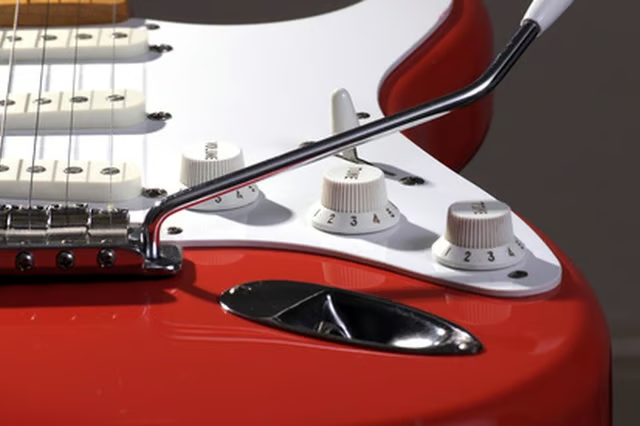
Fender Stratocasters feature adjustable string saddles on the bridge to set the string action, also called string height. Action is highly subjective, and there is no such thing as the "perfect" string height to anyone but the individual. Stratocasters and guitars with similar bridges have an advantage over side-adjustment bridges, as the individual strings can be adjusted to player preference. There is also an increased margin of error because of the rounded contour of the neck's fretboard. Make the adjustments slowly and methodically for best results.
Things You'll Need:
Things You Will Need
Measure the gap between the bottom of the string and crown (top) of the 17th fret with a ruler. Depending on the neck radius, the measurement on the bass side (three lower strings) should be approximately 4/64 inch (1.6 mm) to 5/64 inch (2 mm). The treble side (three top strings) should be around 4/64 inch (1.6 mm) to 3/64 inch (1.2 mm).
Insert the hex wrench into the hex screw on one side of the lowest string (E or 6th) saddle and adjust up (turn clockwise) or down (turn counter-clockwise) until the string reaches the target measurement on the 17th fret. Adjust the second hex screw on the saddle to level and stabilize the saddle.
Continue adjusting the saddles of the remaining strings until all target 17th fret heights are reached.
Play the guitar and evaluate the action.
Raise or lower each saddle as in steps 1 through 3 using a higher or lower target measurement to adjust the action to your liking.
Warnings:
- Adjusting the string action too low may cause buzzing frets. Fret issues must be entrusted to a professional, as attempting to file or sand frets can cause expensive damage to your instrument. Making multiple adjustments without experience may result in an unplayable instrument and a more expensive set-up bill at the repair shop.