
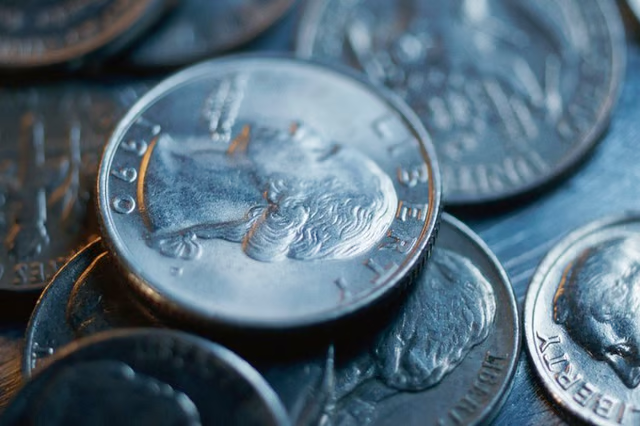
"Junk" silver is anything but. The term refers to coins that contain silver, and are collectible only because of their precious metal content. United States half dollars, quarters, and dimes minted before 1965 were made from 90 percent silver, and it is still possible to find these valuable coins in circulation. By buying rolls of these coins from your local bank, you can earn money while effectively paying for nothing except for gas.

Drive to your local bank and ask if they have any rolls of coins for sale. You are looking for rolls of circulated coins, so don't be afraid to ask the teller if they know the origin of the rolls. Uncirculated rolls from the Federal Reserve will not contain any silver coins.
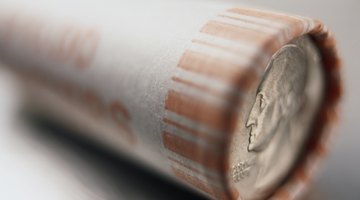
Buy as many rolls of circulated half dollars, quarters, or dimes as you can afford. Collectors tend to report better results with half dollars, most likely because many noncollectors do not realize that half dollars minted from 1965-69 contain 40 percent silver. The more rolls you purchase, the more likely you are to happen upon silver coins. Remember that the money you are "spending" is not actually gone -- your nonsilver coins can simply be exchanged for more rolls later.
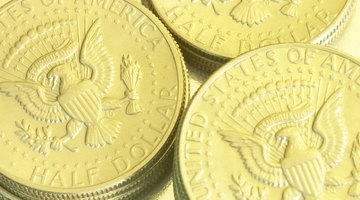
Bring your rolls home and look through them. Set aside any coins dated 1964 and earlier, and half dollars dated 1965-69. With any luck, you will find a few.

Reference the spot value of silver using the link in the "Resources" section of this article to determine the value of your silver coins. As a general rule, each $1 in face value of 90 percent silver coins contains about 0.715 troy ounce of pure silver, and every $1 of 40 percent silver coins contains about 0.295 troy ounce of silver. These calculations are slightly imperfect, however, because coins lose metal content as they wear. The exact silver content of your coins can only be determined by weighing them.
Sell your silver coins at a coin shop, or save them for a rainy day.

Place the nonsilver coins back into rolls, and either return them to the original bank in exchange for more rolls, or try a different bank. If you have several banks nearby, establish a rotation to avoid buying back rolls that you have already searched.